
Achieving Creative Hyper-Personalization with AI
AI can help produce creative variations for many audience groups, from persona research to delivery. This article outlines a practical framework and explains how to test whether those variations improve results.
By EpicflarePublished Updated 6 min read

Sleep Optimizer
Restful Nights

Wellness Enthusiast
Cold Plunge Ready
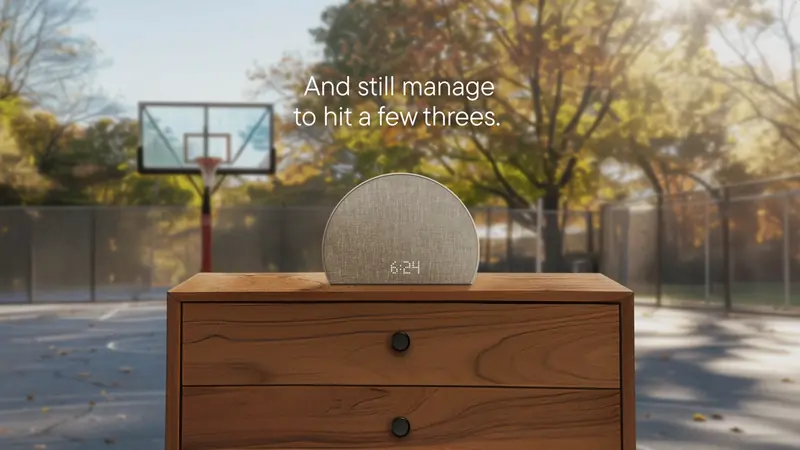
Active Achiever
Game Ready

Life Optimizer
Great Days
In advertising, the goal has always been to deliver the right message to the right person at the right time. Traditional marketing approaches this through segmentation, grouping audiences by broad demographic or psychographic traits.
AI makes a further step possible: hyper-personalization. It goes beyond audience targeting; one of its most promising applications is custom creative at scale, the ability to produce and deliver advertising assets tailored to tightly defined customer groups.
Instead of one message broadcast to many people, each group can receive a message written for its needs and context. Whether that improves engagement, conversion or efficiency is a question to answer with a test, not an assumption.
Creative Relevance as a Factor to Test
Creative relevance is one factor to test alongside audience, offer, placement and delivery. AI can support the production of variations, but their value should be assessed through a defined experiment rather than assumed in advance.
When the visual and textual elements of an ad are adapted to a group’s needs, tastes and context, their effect can be assessed on three levels:
- Engagement: Compare CTR across variations while keeping the test design and delivery conditions in view.
- Acquisition: Evaluate conversion quality and CPA against a defined baseline.
- Audience relevance: Test whether a different message improves the outcome for the intended audience.
A Framework for AI-Driven Creative Personalization
Phase 1: AI-Accelerated Insight and Persona Generation
Every campaign starts with an understanding of the audience. AI can speed up parts of this research and make it more systematic.
A large language model (LLM) can be used to analyze a broad set of sources: public information such as social media trends, search query data and industry analysis, as well as first-party data such as customer relationship management (CRM) records, website analytics and transcripts of customer service calls.
From this material, the AI can propose candidate audience archetypes that the team may not have considered.
The next step is to bring these personas to life. Marketers can “interview” the AI-generated archetypes, asking about their motivations, daily challenges, lifestyle aspirations and even their preferred interior design styles. The result is a set of detailed profiles that serve as a creative starting point.
Synthetic personas are hypotheses, not research participants: check them against real customer data before building a campaign on them.
Phase 2: Building the Creative Scaffolding for Scalable Production
With clearly defined personas, the challenge is to create tailored advertising for each one without prohibitive costs and timelines. This is where generative AI can help.
The strategy is not to create thousands of unrelated campaigns, but to establish a core message promise that remains consistent. AI is then asked to interpret what that promise means for each persona.

Visual Generation
Image generation models interpret the core message promise through the lens of each persona. They can produce many visual variations reflecting each group’s lifestyle, aspirations and aesthetic tastes, with different color palettes, environments, compositions and character archetypes.
Copywriting at Scale
Similarly, a model can be guided by a specific brand voice. Given the core message promise and detailed persona profiles, including motivations and pain points, it can draft tailored headlines, body copy variations and calls to action. Each variation still needs brand, legal and quality review before it goes live.
Assess production efficiency by tracking time spent on briefing, generation, review, revisions and deployment. Include model, tool and human review costs when comparing the workflow with the existing process.
Phase 3: Dynamic Delivery and Auction-Time Optimization
The final step is to deliver these personalized assets in a structured way, which requires structural automation.
Instead of creating ad sets manually or uploading all assets into a single, undifferentiated campaign, an automated trafficking step can connect to the media platform’s API, create a distinct ad set for each persona and populate it with the visuals and copy generated for that audience, ready for review before launch.
This creates a readable campaign structure: performance can be analyzed persona by persona, and each ad set’s optimization stays focused on its intended audience. At auction time, the platform’s own optimization then works within these ad sets, using signals such as search history, content consumption and location to select the combination of assets it predicts will perform best for each user.
This two-layer approach combines persona-based segmentation with auction-level personalization.
Advanced Applications and How to Measure Them
This framework makes some strategies practical that would be difficult to execute manually at scale. Each of them still needs a test plan.
Creative A/B test with AI-generated variants
Three creative variants, each adapted to a distinct audience segment.
Illustrative mock ad
Peak Performance Daily
Professional fitness coaching
Start 7-Day TrialVariant A: Young professionals
Working professionals, 25–35
LinkedIn, career sites, morning commute
- Impressions
- To be measured
- CTR
- To be measured
- Conversions
- To be measured
- CPA
- To be measured
Message focus
- Professional achievement
- Energy and performance
- Sleek interface
Illustrative mock ad
Fit in 15 Minutes
Quick workouts for busy parents
Try Free WorkoutVariant B: Busy parents
Parents, 30–45
Facebook, parenting blogs, school hours
- Impressions
- To be measured
- CTR
- To be measured
- Conversions
- To be measured
- CPA
- To be measured
Message focus
- Time-efficient workouts
- Family health
- Quick progress
Illustrative mock ad
Transform Your Body
Advanced training & nutrition
Join CommunityVariant C: Health enthusiasts
Fitness enthusiasts, 22–40
Instagram, fitness creators, gym apps
- Impressions
- To be measured
- CTR
- To be measured
- Conversions
- To be measured
- CPA
- To be measured
Message focus
- Advanced features
- Training progression
- Community
Multivariate Creative Testing
Traditional A/B testing compares one variable at a time. With dynamic creative, a platform can test many combinations of assets in parallel and learn which ones work for different audience segments. Platform optimization shifts delivery toward early leaders, however, so it does not replace a controlled test when you need to know whether a variation caused a difference.
Scalable Creative Messages
This method lets a brand keep a coherent core idea while adapting the way it is expressed for different audiences, so that broad-reach campaigns can still feel personal.
Hyper-Local Targeting
Hyper-local advertising goes beyond targeting a geographic area: it adapts the creative message to the character and needs of the local population. AI can help by drafting creative from localized data, with local review to check accuracy and tone.
Conclusion: The New Role of the Marketer
AI-powered creative personalization is not a tool for replacing human ingenuity but for augmenting it. It can reduce the repetitive work of manual segmentation and creative iteration, leaving marketers more time for strategy.
The marketer’s role moves toward that of an AI director: defining the core promise, curating the creative output and interpreting test results to understand what actually works.
Used with clear experiments and review, this approach can help brands make their advertising more relevant to the people they want to reach.
Go further
Agentic AI and media buying: An investment guide
A framework for assessing architecture, interoperability, operating costs and control when investing in AI for media buying.
PDF · 27 pages · Free · one short form unlocks every resource
Related reading
- AI for Ad Operations: From Request to Controlled Execution
Explore an AdOps workflow for deal requests, with explicit business rules, human approval and practical criteria for evaluating AI support.
- Bringing AdTech Expertise into AI Workflows
Turn platform knowledge, business rules and operational playbooks into AI workflow requirements, then test how reliably they are applied.
- AI Agents or Automated Workflows? Choosing the Right Approach
Compare AI agents and automated workflows through task requirements, control, evaluation and operating cost to choose a suitable starting point.
- Building an AI Workflow: Start Small, Evaluate, Expand
Scope an AI workflow around one operational task, define evaluation criteria and add complexity only when testing shows it is needed.